
Introduction
Not every surface cleaning job requires an aggressive abrasive. For applications involving delicate components, sensitive surfaces, or materials that can be easily scratched, a gentler abrasive can provide a better solution.
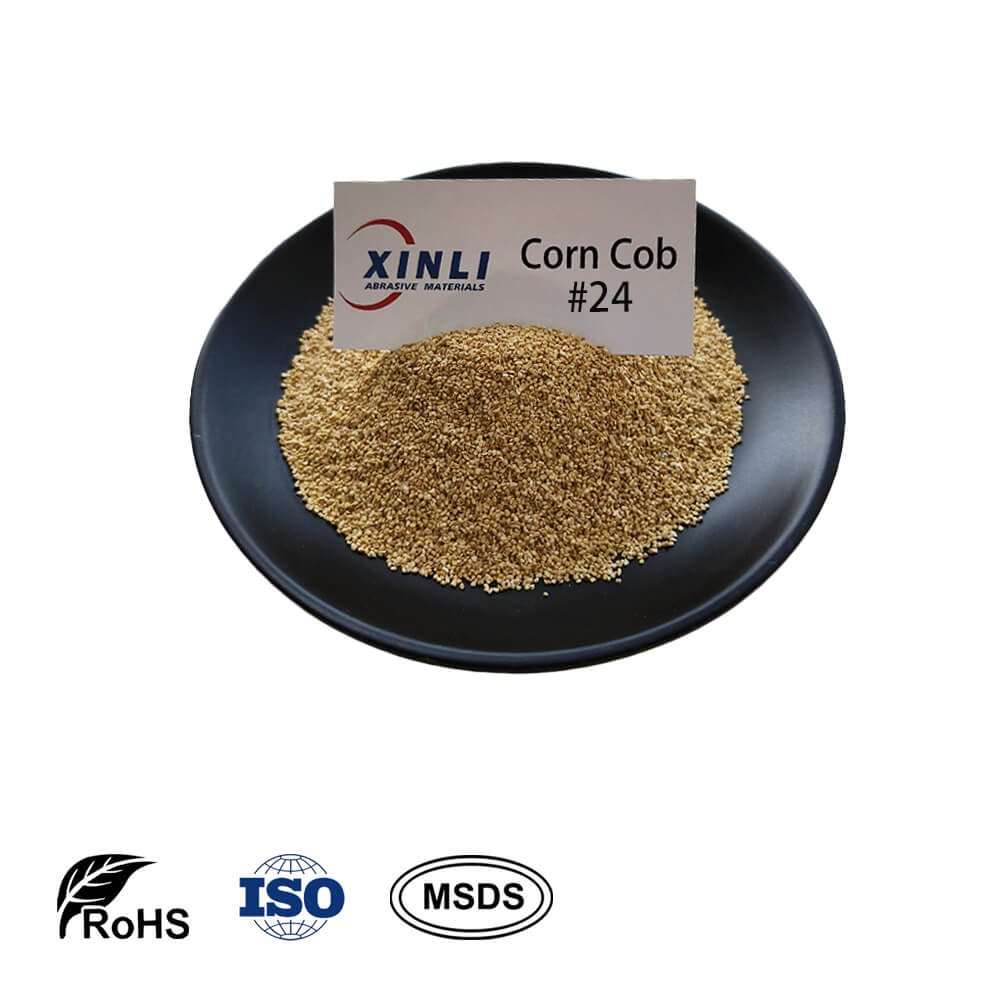
Corn cob abrasives are a plant-based abrasive media made from processed corn cobs. Their lightweight structure, absorbent properties, and relatively soft characteristics make them suitable for a range of cleaning, drying, polishing, and blasting applications.
Compared with harder mineral abrasives, corn cob media can help remove contaminants while reducing the risk of excessive surface damage.
What Are Corn Cob Abrasives?
Corn cob abrasives are produced by cleaning, crushing, screening, and grading corn cob material into controlled particle sizes.
Because corn cobs are naturally lightweight and porous, the resulting abrasive media have useful properties for applications where absorption and gentle surface treatment are important.
Depending on the particle size, corn cob abrasives can be used for different purposes, from light cleaning and polishing to more controlled blasting and drying operations.
1. Gentle Surface Cleaning
One of the most common applications for corn cob abrasives is gentle surface cleaning.
Corn cob media can help remove:
- Dust and loose contaminants
- Light dirt and residue
- Surface deposits
- Coatings and unwanted material in selected applications
- Residual moisture and contaminants
The relatively soft nature of the material makes it useful when the substrate needs to be treated more carefully.
This can be particularly valuable for components made from softer materials or surfaces where maintaining the original appearance is important.
2. Drying and Moisture Absorption
Corn cob abrasives are also valued for their natural moisture absorption capability.
After cleaning or processing, corn cob media can help absorb residual moisture from surfaces and components.
This makes it useful in applications where keeping parts dry is important.
For example, properly sized corn cob media may be used for drying or polishing components after washing, helping reduce residual moisture without relying on a highly aggressive abrasive.
3. Gentle Blasting
Corn cob abrasive media can also be used in selected blasting applications where a softer alternative is preferred.
Unlike harder mineral abrasives, corn cob media can provide a more controlled cleaning action.
This makes it worth considering for:
- Delicate components
- Soft surfaces
- Light coating removal
- Surface preparation
- Cleaning around sensitive areas
The appropriate particle size and blasting conditions should always be selected according to the substrate and desired surface finish.
4. Polishing and Finishing
Fine corn cob media can also be used for light polishing and finishing applications.
Its lightweight structure allows it to work differently from conventional hard abrasives. Instead of relying primarily on aggressive cutting action, corn cob media can provide a gentler treatment that is useful when the goal is to improve surface cleanliness or appearance.
Particle size is particularly important here. Finer grades are generally better suited to applications requiring a softer finishing effect.
Why Choose a Plant-Based Abrasive?
One of the main advantages of corn cob abrasives is their plant-based origin.
For manufacturers looking for alternatives to conventional mineral abrasives, plant-based media can provide another option for certain cleaning and surface-treatment processes.
Corn cob media can offer a combination of:
- Lightweight handling
- Natural absorbency
- Gentle abrasive action
- Biodegradable plant-based material
- Different particle sizes for different applications
However, the best abrasive always depends on the specific application. Corn cob media is not intended to replace every type of abrasive. Instead, it is particularly useful where gentle cleaning, drying, absorption, and reduced surface aggressiveness are priorities.
Choosing the Right Corn Cob Abrasive Size
Particle size has a significant effect on performance.
A finer grade may be appropriate for gentle cleaning, polishing, or finishing, while a coarser grade can provide stronger mechanical action and may be better suited to certain blasting or cleaning applications.
Before selecting a grade, manufacturers should consider:
- The material being treated
- The level of contamination
- The desired surface finish
- The equipment being used
- Whether moisture absorption is required
- The required processing speed
Testing a suitable grade on the actual substrate is recommended before full-scale production.
Conclusion
Corn cob abrasives provide a useful plant-based option for applications requiring gentle cleaning, drying, polishing, and controlled surface treatment.
Their lightweight structure and natural absorbency make them particularly interesting for manufacturers looking for alternatives to harder abrasive media.
At Xinli, we focus on providing consistent plant-based abrasive materials for different industrial applications, helping customers select suitable grades according to their processing requirements.
Looking for the right corn cob abrasive for your application? Contact us to discuss your material, particle size, and processing requirements.
1 Comment
A WordPress Commenter
Hi, this is a comment.
August 3, 2026To get started with moderating, editing, and deleting comments, please visit the Comments screen in the dashboard.
Commenter avatars come from Gravatar.